


Scrum defines three accountabilities that make up a scrum team: a product owner, a scrum master and the development team. Many organizations include more roles in their organizational charts, which leads to confusion about the differences between a product owner, a business analyst, a product manager, and a project manager.
The roles of product owner, product manager, and business analyst have multiple similarities, in fact, some Certified Scrum Product Owners actually work as product managers or business analysts and many project managers transition to the role of product owner as they adapt an agile way of working. In this article I will dive into how the product owner serves the scrum team as well as what the differences are between these job titles and roles.
Product owner vs. product manager vs. project manager
As a management and strategy consultant and an agile transformation coach, I often get questions like:
“Should we plan on hiring a product manager to manage product owners?”
“How many product owners can a product manager manage?”
“Should we not have a business analyst in the scrum team to write user stories?”
“If we do not have a business analyst on a scrum team, does the scrum master write user stories?”
“So product owner is the same product manager and scrum master is the same as project manager, right?”
“Can a product owner and project manager be the same person?”
“Since the project manager manages the team, doesn’t the product owner report to the project manager?”
The primary reasons for these questions, in my experience, are:
The desire to do the right thing exists. And there is a genuine lack of awareness and knowledge.
Design or structure of the organization and assignment of responsibilities are hybrid or partial. While scrum tries to place the responsibility with the right accountability, the shadow of hybrid or traditional approach continues to lurk in the dark.
Scrum and agile are viewed as something that the team does, and it is assumed that it does not impact the rest of the organization.
“Becoming agile” is viewed as a “project” and a “budget” is allocated for its adoption rather than a mindset and a cultural shift. The budget is sometimes less than the annual salary of a developer. So there isn’t enough training and coaching in the organization on what the roles or accountabilities really are.
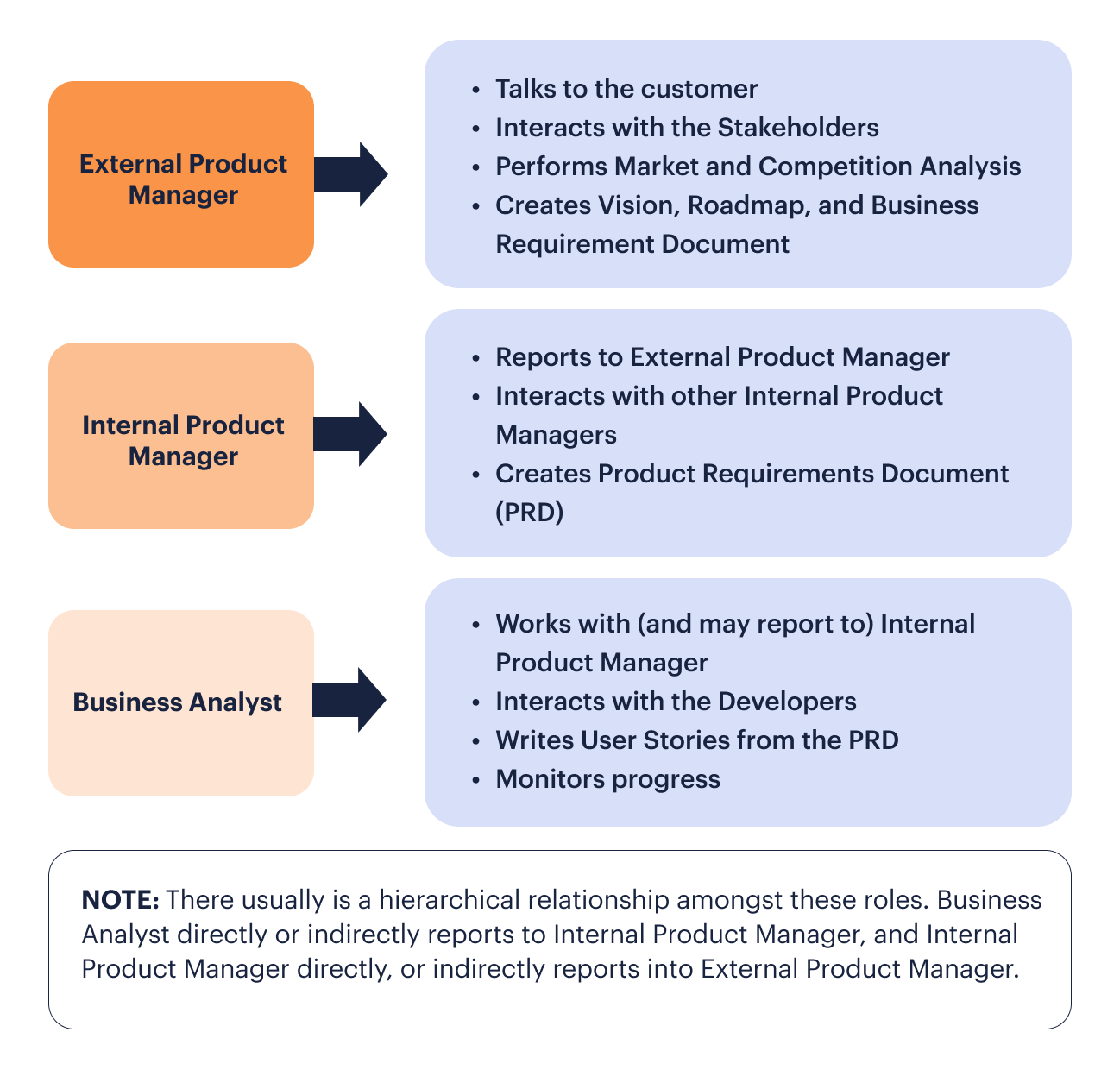
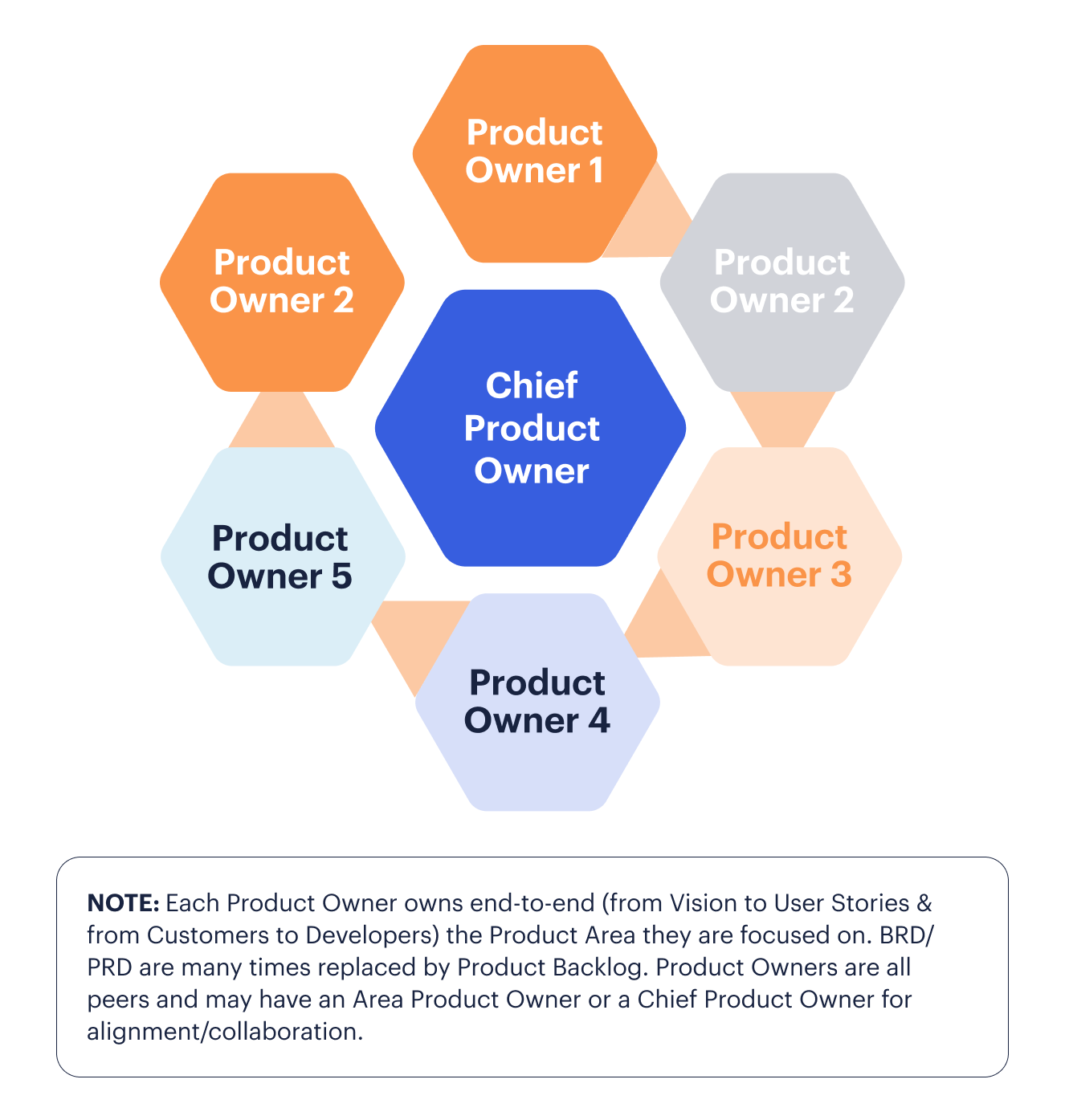
Rather than answering the above questions individually, let's take a very high-level view of these roles in a traditional (Figure 1) versus agile environment (Figure 2) since that’s where the confusion usually starts.
Traditional approach vs. agile approach
Product management in a traditional environment (Figure 1)
Product ownership in an agile environment (Figure 2)
The following table compares a few attributes/characteristics of the four roles – Product Owner, Product Manager, Business Analyst & Project Manager.
How do you embrace an agile mindset?
The questions above arise only if your organization has not completely embraced agile/scrum or is using hybrid scaling approaches. Trying to blend agile and traditional approaches is confusing to the organization, product, and teams. That’s why becoming agile is a Boolean – True or False. Based on this, try and answer the seven questions at the beginning of the article yourself. If your organization is unable to embrace agile, then remain traditional. Do not confuse the two.
Related Article: These are the Differences Between Agile and Scrum, and How They Differ From Waterfall
Develop the skills to build products that matter
Gain practical tools and insights to connect with customers, prioritize what truly counts, and bring clarity to your product vision. The Certified Scrum Product Owner course equips you to create impact through every iteration.
About the author